A few days ago I had to give my last presentation at my MEd class. It was a great experience. Not only because it marked the end of a very important step in my professional development, but also because it was achieving a 2-year program that had to fit into a very busy schedule.
In terms of learning I had a great deal of it, personally and as a member of a great group of professionals of different areas (interpreter/translator, librarian, teachers, dentists, police men, linguist, lawyer, graphic designer, and me, a biologist turned educator). The perspective to see many things was very rich coming from such a diverse group.
My last presentation was about the education in the future, in order to prepare for that I had to review a large amount of information from the past and try to set one of the possible scenarios for the near future of education, I don't think anybody can accurately predict the long term future of education, changes are too rapid and technologically strong to predict something for more than 15 years.
It was undeniable for me to foresee, as many others have done that the way we assess and evaluate students will not serve a real purpose in the long run. We´ve been assessing students' knowledge based on the amount of information they can remember. That might have been useful before, but nowadays anybody with internet access can have access to almost infinite amounts of information. Definetely, that is not the ideal way we want to make sure we're educating our students right. It is not how much information they may remember or memorize, it is what they can learn, create or produce from it that really matters.
The following video is a great way to see that, it is an experience called I Scientist in the UK:
I Scientist film from Storymakers TV on Vimeo.
The following video speaks for itself, let's democratize education and have mistakes being a part of the learning process.
These are some of the words I could type in my iPod while I was reading about learning theories and i think it's useful for my thesis that tries to link use of technology with learning strategies:
Education in the 21st century must not be restricted to theoretical and abstract knowledge acquisition. It is imperative to put even more emphasis in skills that promote obtaining, selecting and analysis of large quantities of information in short periods of time.
Learning must be active in the sense that any learner must have the capacity to take informed but fast decisions based on vast amounts of information presented in different formats, in order to produce analytical comments and recommendations presented in visually-frienly and attractive formats.
Learning must be based on training of skills on the move, and the evaluation methods must be modified from assessing the amount of processes in what Vigoysky calls, the Zone of Real Development, and the Zone of Proximal Development. This is of great importance due to the fact that the amount of information available to anybody with Internet access is practically infinite. It would be counterproductive to pretend that society can determine the professionalism of a person, or the academic or developmental potential of an individual based solely on the amount of knowledge already acquired, instead of the potential production and creative solutions that individuals can provide if learning skills are directed and trained.
These skills are hardly obtained if the student is left untrained. And it is in this part where today's students are found in significant amounts. The economic constraints in developing countries imposed by superficial needs to follow the lifestyle of developed countries, obliges parents to maintain more than one job at the same time, leaving young students (teenagers) at the will of mass communication media and their own to overcome the academic exigencies imposed by public and private schools.
Once these young students are left alone or minimally supervised at home, they are prone to the actions of a massive avalanche of information that demands the information user to be developmentally mature, a blending between the concrete and abstract operational stages described by the famous psychologist Jean Piaget decades ago.
It is the formation of the personality, organizational skills and academic goals,or their absence what will determine the perspective and desire of learning for the future life of young students.
The essential skills to be developed have to cover these gaps of parental attention and circumstancial solitude facing the academic demands. Cognitive and metacognitive skills, in that order take years of academic training, usually obtained in the years spent in higher education. However, the cultural, economic and technological demands require education to be oriented towards the formation of an individual with order, positive attitude and ambitious goals supported by a solid academic basis.
Based on Vigotsky's theory, the proximal area of development is the area that 21st century education must concentrate its efforts, because it is now impossible to sum up information and knowledge as could be done only a few decades ago. The amount of information is doubling in less than 5 years already, this infinite amount of information could not be acquired using traditional educational methods, mostly based on memorization and classic repetition of information. It is the intense training of cognitive and metacognitive skills in conjuction with clear practical applications to what is being learned, bringing real-life applications to my class and out of it.
Showing posts with label future. Show all posts
Showing posts with label future. Show all posts


10/16/2010
Global revolution...ing

How many times in your life can you say that you've been part of a global revolution? Not many, I would assume, or perhaps a lot, depending on which revolution you think i'm writing about. There are indeed many revolutions happening right now. Some can be summed up in Technology (Information, Communication), others in Science (Biology, Medicine), but all of them should have a commanding force: Education.
I read news, reports, journals and so on about Biology, Education, Technology and Culture in general, and every single day I get enough adrenaline to continue form one more year.
I regularly watch TED lectures, and there are two speakers that are my favorites: Sir Ken Robinson and Juan Enriquez, not only because they tell us the stories and things we must listen to and work on, but also because they speak from their hearts and minds with passion and humor.
This morning I watched 2007's Juan Enriquez wants to grow Energy, and agriculture was the centralized topic.
I have just finished watching 2010 Sir Ken Robinson's Bring on the learning revolution!, and again there was a central reference to agriculture, and this reference was metaphorically essential. We need to grow education, water students with appropriate learning environments, and harvest life-long learners eager to act on their and our world's problems to arise.
I dream about doing things better in my life, family and work, the beauty of being an educator is that even though we can make mistakes, we can offer knowledge and opportunities to students, and have a larger impact in other people's lives.
I am in the middle of revolutionary times, and so are you, I'll try my best, but if you are a student you have to at least match that effort. And yes, you can do it.
8/22/2010
Sustainability

This conference talked about many things, but the main theme and drive was to promote concrete actions for schools in Lima, Peru regarding a very important issue, educating our student with a Sustainable Development approach, perspective and creed. After all, doing that will help us take good care of our planet by consuming Fair Trade products, raise community awareness, organize and participate in students' activities, and overall, be responsible with ourselves and our planet.
You can find more information about this conference and the informatiuon that was made available through its wiki, click here.
Fair Trade is the approach to business by doing things in a sustainable way, better wages, giving things back to the community, which promotes further development and increases the production and helps businesses grow by taking good care of the planet. Find out more about fair trade from: Wikipedia, Fair Trade Foundation (UK), Fair trade Labelling Organizations International (FLO), Fair Trade Federation (US), and review some good examples of TransFair (US).
One of the impacting messages I took from this conference is to be aware of the products I and most of us consume. I'll follow this post with another one about Green Chemistry, but take the time to visit a very interesting website, The Story of Stuff, where you can watch Annie Leonard.
The best of all is that The Story of Stuff will help students raise awareness in their immediate community, and for us teachers, we'll be able to use their resources for teaching this and other lessons.
1/22/2010
eReading, WiFi Pedestrian
I’ve been downloading several iTunes files to learn about Psychology (Yale 1, 2), or American History, or even learn how to make iPhone Apps. This is a trend that has been followed by many universities already.
It is undeniable that our life has been molded towards mobile gadgetry. My 6 yo son complains when I change his movie trailers from the iPod, and sometimes enjoys listening to Paul Bloom lecturing about Psychology.
So, that makes me think that in the 5 years we could be seeing at highly innovative new products, but I’m sure we’ll updated versions of the current, still “new” products.


What will come next then? Will we track our children’s location with subdermal GPS devices? Will the refrigerator in your kitchen remind you of today’s To-Do list while it sends the shopping list to the local market?
What comes next? What is in the future of mobile and technology devices for our kids?
11/02/2008
The Future - November 2nd
I stumbled upon this conference about the future of media. Even though it's a long video, it is certainloy interesting to hear Gerd Leonhard, a known futurist, talking about Web 2.0 as our current future..... or present?
9/27/2008
Green thoughts, or so i thought - September 27th
 I remember reading about serious green movements in the early 90's when I was coming out of my teenage years. It sounded as the right thing to do, but how much have we done ever since? Buty "we" I mean us, society, you, me and everybody else. Governments sign agreements, treaties, one less respected than others. As with any other world topic, it is subjected to politics but, in this case, mainly to economics. Yes because it is the money the ruler of any movement right or wrong trying to save our planet.
Our society and even the industry predicates the good manners to conserve our planet. Be sure that I started being very concerned when news kept coming about global warming, ice caps melting, icebergs breaking down, hurricanes increasing frequency and intensity, El Niño visiting us more often, etc.
All of this made me think, how are my two children going to live in this world. When they turn 25, the world's population will be around 9 billion people, and I'm sure the oil will still be driving the economy, but it will have a very strong competitor, water.
Yes, water shortage is a reality. and not a projection. Not in vane "Thirst" was the winner of the SlideShare annual contest, because it is something we are living, not something we're hypothesizing.
7/23/2008
Spinal Cord Injuries - July 23rd, 2008
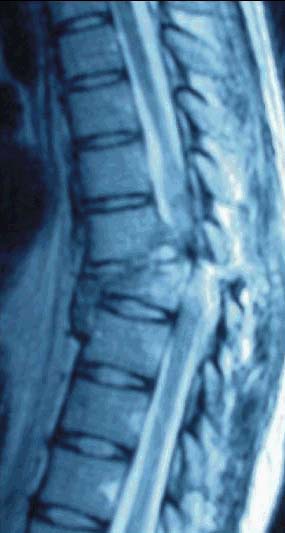
I just read about some exciting news. Investigation has been conducted on spinal cord injuries and found that stem cells within the spinal cord could help injured patients if they are properly stimulated to cause less scarring and more and more healing cells.
We hear about stem cells practically on a daily basis, something hard to believe considering that it still raises so many so-called ethical issues.
Regardless of politics or ethics, stem cells will probably the weapon against major diseases that are killing millions around the world nowadays.
We only need to remember that stem cells aren't only obtained from frozen embryos from fertility clinics, they can also be obtained by more mature cells in the body.
You can obtain the open access report by visiting the PLoS Biology website.
Subscribe to:
Posts (Atom)

 Posts
Posts





 Linkedin/glazaro
 Twitter/glazaro
 YouTube/sjtics
 Del.icio.us/glazaro
 Skype/glazaro
 Technorati/glazaro
 MyBlogLog/glazaro
 Blog/Gerardo Lazaro
 Blogger/glazaro@sanjorge.edu.pe


