Showing posts with label Science. Show all posts

2/13/2011

New approach to technology for children


I was very fortunate to participate in yesterday's VII International Seminary "Digital Brain". It happened in Lima, Peru and it was organized by Cerebrum (Neuroscience, Education and Human Development) a very active and renowned organization in charge of spreading knowledge and best educational practices based on neuroscience, pedagogy and psychology investigations. There were two speakers, Anna Lucia Campos and Gary Small, MD (www.drgarysmall.com), a world renowned neuroscientist with lots of publications on topics such as: nuerology, psychiatry, memory, brain and Alzheimer Disease.
During their presentations lots of interesting facts, investigations and proposals were considered. the best of all is that it changed the way I think about exposing young children to technology and the newest gadgets. For some of the comments from the presentations follow the hashtags: #CerebroDigital and #DigitalBrain in Twitter, or go to Cerebrum's twitter account: http://twitter.com/cerebrumdigital.
Even more by the fact that I saw some of Sugata Mitra's videos and investigations to ask myself a question: Should we radically change the way we teach and expose children to technology?

Take a few minutes by watching these videos, and help me answer that question:

Sugata Mitra shows how kids teach themselves


Sugata Mitra: The child-driven education


http://goo.gl/THJYL

3/07/2009

Can child diabetes be prevented with a vaccine?


A few weeks ago a friend of mine came from Monterrey, Mexico. We were having dinner with him and other friends from university. We're all biologists graduated from the same class. We were talking about many things in general, and one of them mentioned the fact that obesity could be caused by a virus. As interesting as it sounded, it didn't seem plausible to the rest of us.

It actually became a good reason to mock his comment, due to the overweight that many of us on that table carry. Although obesity has not been proved to be directly related to a viral infection, I just found out a report that indicates that a virus may trigger child diabetes.

Diabetes type 2, no longer referred to as late-onset diabetes because the onset age has been reduced from 40s to the teen years or less, is a serious public health concern in many countries arounf the world, especially in the 1st world countries, where that is becoming as common as a common cold.

Diabetes type 1, insulin-dependent, or juvenile insulin is also quite common around the world. And it is said that three-quarters of diabetes' cases are type 2.

But, what does this have to do with a virus, which is not alive or dead, however is a pre-life complex form of macromolecules perfectly structured and organized?

Well, it appears that enteroviruses have been found in 60% of pancreatic samples from type 1-diabetes patients and 40% of type 2-diabetes. This article was published in March, in the Diabetologia journal.

This is a great story to tell my students when teaching them about the way science funstions, and how sicientists' work is validated, cross-referenced, proved right or wrong, somtimes without any direct connection.

it appears that enteroviruses affects both types of diabetic patients intervening in immune reactions causing the disfunctionality of the insulin-producing machinery in the beta-cells of pancreas.

Another separate report in Science magazine mentions mutations in a gene that reduces the risk of diabetes, it just so happens that the gene is involved in the immune reaction to enteroviruses.

As in many cases of the intricate nature of our human physiology, no single-reason, single-effect is the cause of a major disease or condition. Multifactorial pathologies are immensely common.

The good news is that it could be possible to prepare an inactive form of the enteroviruses (one they're identified) and use it in a vaccination campaign to reduce the incidence of diabetes cases.

For more information, visit this link.


12/16/2008

Welcome Members of DIM-Barcelona, SPAIN


Thanks to our visitors from DIM Barcelona-Spain, one of the greatest and most diverse cities in the world. Home to the best soccer team in the world, Barca FCB.....Can you tell I'm a big fan?
My blog is dedicated to the process of Learning anything interesting, with a tendency to explain and question things from the Science's and Technology's points of view, or at least I try to.
I hope you can enjoy reading it as much as I enjoy writing it.

Gracias a nuestros visitantes del DIM Barcelona-España, una de las más grandiosas y más diversas ciudades del mundo. Hogar del mejor equipo de fútbol del mundo, el Barca FCB.......¿Se nota que soy un gran fanático?
Mi blog está dedicado al proceso de Aprendizaje, con tendencia a explicar y cuestionar las cosas desde el punto de vista de la Ciencia y la Tecnología, o por lo menos eso intento.
Espero que disfruten leerlo tanto, como yo disfruto escribiéndolo.

7/25/2008

Bat the fat! - July 25th, 2008


Trans fat is a type of modified fat, vegetable oil (liquid) is transformed into solid fat. But, why is it done? Simply because it has neutral flavor, it's good for frying and makes foods last longer, as it is mentioned by the BBC news update. This update tells us that California is the first US state to ban trans fat in their foods, following previous initiatives from some cities like New York and Philadelphia.


Trans fats are linked to increasing levels of the LDL or bad cholesterol, the type of cholesterol that makes our cell membranes less fluid, and our arteries harder than necessary, finally connected with heart conditions, of course that happens after years of daily trans fat consumption.


Cis fat in turn, is a good type of fat, because it is what our cells regularly use. And as polyunsaturated fats, they are considered heart-friendly.


So the California initiative is a very good one, shame it will be fully implemented starting January 1, 2010 and not before.


7/23/2008

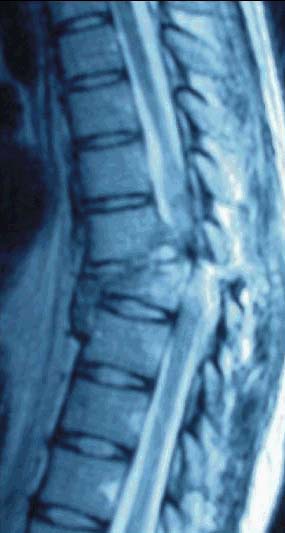
Spinal Cord Injuries - July 23rd, 2008


I just read about some exciting news. Investigation has been conducted on spinal cord injuries and found that stem cells within the spinal cord could help injured patients if they are properly stimulated to cause less scarring and more and more healing cells.

We hear about stem cells practically on a daily basis, something hard to believe considering that it still raises so many so-called ethical issues.

Regardless of politics or ethics, stem cells will probably the weapon against major diseases that are killing millions around the world nowadays.

We only need to remember that stem cells aren't only obtained from frozen embryos from fertility clinics, they can also be obtained by more mature cells in the body.

You can obtain the open access report by visiting the PLoS Biology website.

7/07/2008

Fertility - July 7th, 2008


Fertility has been an issue since the beginning of human societies. According to its definiton, it is the capacity to conceive and generate offspring. In many ways, fertility is one of nature's selective methods to allow only the fittest to continue the life journey along time.

Plants have great resources for reproduction: wind, water, animal-assistance, etc. Some animals also use some of those resources. However, the more complex the animal, the more complex the reproductive method, and the least successful. Sexual reproduction in complex animals such as humans has been a major advance, but also a major restriction. Why? Humans as animals, cannot survive purely by themselves until late infancy. Which means that humans need a lot of support, energy and guidance. And who is going to provide that but the mother.

Humans need extra energy and time, because they need to mature a series of complex structures (organs and systems) that will help accomplish life's exigencies.

Most of these requirements are guided toward the maturation of the nervous system, mainly the growth of the brain and its annex structures. That is human's trade off. It has been a sacrifice to invest in a longer period of gestation and rearing to obtain a highly-complex, multi-tasking animal capable of interacting with its envioronment not only sensorially but also at a very important level, socioculturally.

So fertility problems, or difficulties to conceive or produce an offspring is just another way nature has used to select us as living things.

But as any other problem, we gçfound a way around to solve it. Infertility treatments started decades ago with trial and error as the main technique, and it wasn't until the late 60's that artificial insemination really started working. And only in 1978, Louise Joy Browne, the first baby conceived by InVitro Fertilization was born in England after Robert Edwards, PhD and Patrick Steptoe, MD performed hundreds of experimental procedures trying to overcome the blocking of fallopian tubes. Decades have past since that first success, and many other procedures have been implemented in the fertility lab, such as: GIFT and ZIFT, SUZI, ICSI, Oocyte maturation, sperm-retrieval procedures and lately, PGD, and lately IMSI.

The question here is, what is the limit? I just read a news report that indicates that a 70 year old woman has delivered twins. Even though I support the assisted reproductive techniques, I think it must be limited to people under a certain range of age. Because, as a father, I can testify that raising kids takes a lot of physical and mental effort, but overall the main ingredient nowadays, is to be able to give them our TIME.

6/24/2008

Prions - June 25th, 2008


It was during my undergraduate years that I started appreciating the trascendence of the work as a scientist. Dr. Stanley Prusiner was not taken seriously initially when he announced the existence of a nonliving transforming agent to the scientific community around the mid 80s.


Prions are chaperone proteins, polypeptides in charge of the folding of other proteins. When a cell contains the infective form, the consequences can be counted by the millions, of cows and dollars. But as humans, we are not exempt of the risks. We can contract a type of prion disease called CJD or Creutzfeldt-Jakob disease, where the brain becomes something like a sponge, literally.

A new report has come out informing that prions are a very strong form af aberrant proteins, describing the work of Wisconsin scientists reporting the persistence of prions in wastewater 20 days after the water passed through regular sewage treatment.
This report is available as open-access in this link.

6/06/2008

Immersed in Technology - June 6th, 2008

It's been only 4 months since I came into this world, yes into the eLearning, Web 2.0, Teacher 2.0, world. It all came amazingly fast to me. I started working in St. George's College in february of this year, and from there on my appreciation on technological tools changed dramatically.
I didn't have a blog or a wiki before. Now I have 2 blogs and 2 wikis.
The Wikis I've prepared are mostly dedicated to class contents, dates, homeworks, assignments, deadlines, etc.
The blogs are focused into something fresh. Something you can read if you're interested in Science or any topic of significant cultural or academic impact.
My first Wiki is a dedicated, and very useful and powerful tool that allows me to extend the communication I have with my students, but also with their parents. That's one of the powerful parts. Although I have to recognize it was not easy to introduce students...and parents into this "new" technology. Even though Blogs and Wikis are not new, in computer time, they are still entering into the Educational world, faster and faster everyday.
The most difficult part was to let people open their eyes, including myself, to an endless list of possible resources, techniques, designs, and content that was usually reserved for elite populations.
that's the beauty of it, knowledge has entered into a real democracy, anyone with an internet connection has access to a limitless amount of information.
All you need to KNOW is that the resources are there for you to start using them and exploiting them, at home, at work and now, in classrooms.
Although it is extremely important that facing such an immense flow of information we must FILTER that information, because not everything will be useful for you at the same time.
My students from lower 5th grade up to middle 1st grade (5th to 7th grade) have learned in the past 3 months to deal with Interactive SMART Boards, Notebook presentations, Issuu displays, PDF documents, Flash Animations, Inserted Images and Videos, Blogs, Wikis, and Podcast.
Three months ago they were not used to this, nowadays they demand that from me. They request that I publish classes and information faster.
I don't know how this will keep changing and evolving, but one thing is certain, it is here we might as well use it or, our student will leave us behind sooner or later.

6/02/2008

Teachers Teaching Teachers


Teachers Teaching Teachers TTTThis past saturday, May 31st, the TTT event took place in Lima-Peru. In Peruano Britanico, the primary teachers, and in San Silvestre for Secondary Teachers, we all had a great experience to learn from peers.I was fortunate because I could present a lecture about "Demonstration of Wikis and Blogs and Internet Resources in the Science Claaroom". For those who couldn't assist to my lecture I publish it in the following link :


Clicky Web Analytics